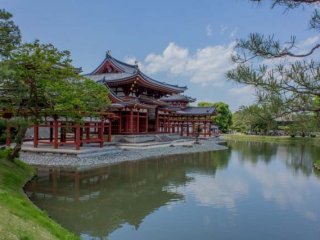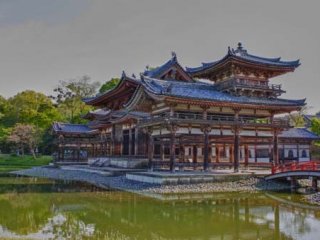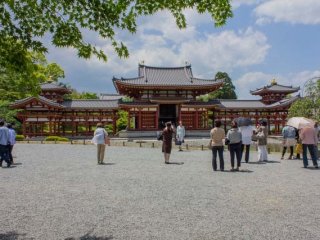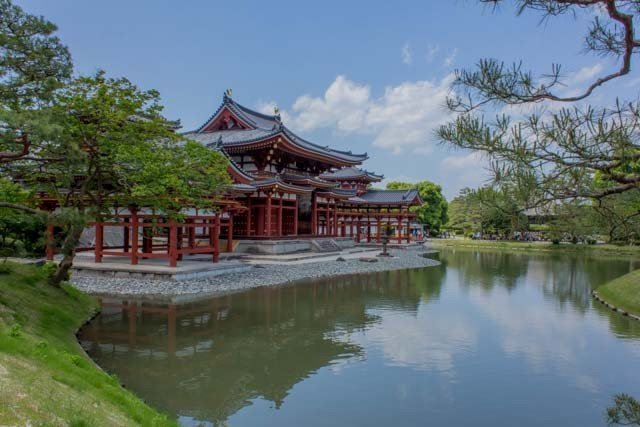
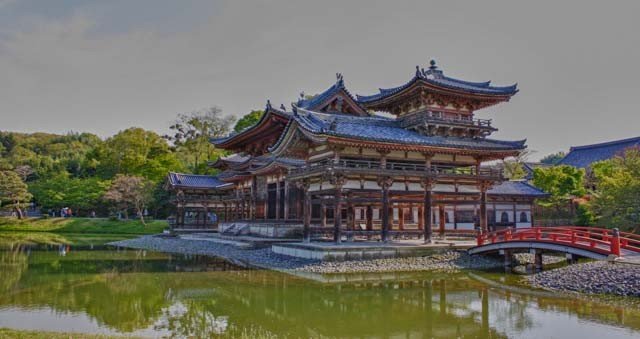
Since March of this year, the Phoenix Hall of Byōdō-in, was once again visible. For the past two years it was covered in scaffolding because of renovation. There is still a small part in the back that is still undergoing construction though. This fall the work should be completed. The famous Phoenix Hall is the main attraction and inside is a statue of Amitabha Tathagata, by the renowned sculptor Jōchō. It dates back to 1053 and is made of wood covered with gold leaf, reaching a height of almost 3 meters. You can still see the Raigō paintings on the wooden doors of the Phoenix Hall, depicting the Descent of the Amida Buddha. They were painted by Tamenari Takuma.
- 1 min read
The Phoenix Hall of Byōdō-in
A World Heritage Site in Uji City, Kyoto

Community writer
The many different faces of the Phoenix Hall (鳳凰堂) of Byōdō-in (平等院): A World heritage Site in Uji City, Kyoto. If you look closer, in the center of the Phoenix Hall you can still see one of the Raigō paintings on the wooden door of the Phoenix Hall, depicting the Descent of the Amida Buddha. They were painted by Tamenari Takuma in the 11th century. They are an early example of Yamato-e, Japanese-style painting, and contain representations of the scenery around Kyoto.of the 11th century
This is the Phoenix Hall (鳳凰堂) in April 2009, when I first visited Byōdō-in (平等院) in Uji City. This is a HDR version
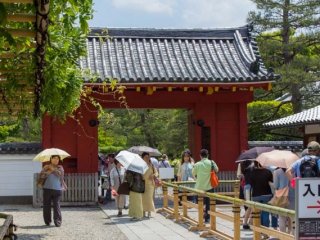
The Omote-mon gate (表門) of the Byōdō-in (平等院) in Uji City, Kyoto. This is the main gate to the temple grounds from the Byodoin Omote-sando (shopping street)
This is a memorial stone to Minamoto no Yorimasa (源 頼政-1106–1180), head of the Genji clan who fought in Uji against the powerful Heike family. He lost against Taira no Kiyomori (平 清盛-1118 – March 20, 1181) and committed suicide by seppuku at the Byodo-in temple while reciting waka poems. Every year, on May 26, a memorial service is held here to commemorate this historical event
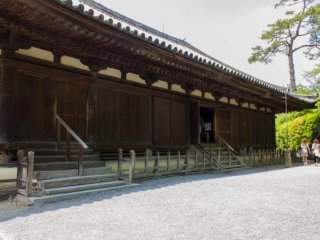
Frontal view of the Kannon-do (観音堂) of Byōdō-in (平等院) in Uji City, Kyoto. Inside is a statue of Rengeshu Bosatsu (Avalokiteśvara) from the Heian period
The Phoenix Hall (鳳凰堂) of Byōdō-in, a popular spot to have your picture taken
Inside the Chudo of the Phoenix Hall is a statue of Amitabha Tathagata (阿弥陀如来), dating back to the Heian Period. This statue was carved by Jōchō (定朝) in 1053 and is made of wood covered with gold leaf, reaching a height of almost 3 meters
Ryūzu Gawara (龍頭瓦) Dragon Head Tile on the roof of Ho'o-do of the Byōdō-in (平等院) in Uji City, Kyoto. There is a legend about these “Dragon Head tiles”. Uji is compared to a great dragon’s palace, and the Uji River, which flows through it, is where the founder of Byōdō-in, Fujiwara Yorimichi, watches over his masterpiece as a dragon god. Dragons also come out quite often in Buddhist teachings as creatures which uphold Buddhist law. Dragons also are featured alongside snakes - which are symbols of fertility - in much folklore and legends in Japan
If you want to take a little break, you can take a rest in this small pavilion and enjoy the scenery of Byōdō-in (平等院) in Uji City, Kyoto
Buddhist figure on a boat in front of the Hondo of Jodo-in (浄土院) of Byōdō-in (平等院) in Uji City, Kyoto
The Hondo of Jodo-in (浄土院) of Byōdō-in (平等院) in Uji City, Kyoto. After passing through the Nan-mon (南門) or south gate, the Jodo-in is on your left side
Inside the Rakan-do (羅漢堂) are wooden sculptors of Chashi Hoshino Dōsai(茶師 星野道斎) and his disciples. The Rakan-do was established in 1614. A Chashi is a master tea connoisseur in the art of selecting and blending tea
The Nan-mon (南門) or south gate of the Byōdō-in (平等院) in Uji City, Kyoto
Fujidana Wisteria Trellis (藤棚) in the precincts of Byōdō-in (平等院) in Uji City, Kyoto. I was a little late to see its flowers, I did hear though that it is quite impressive. This wisteria tree is believed to be around 250 years old and blooms from late April to early May. This is a Golden Week favorite for many
Leave a comment
0 comments in total
Book your trip
Find a nearby hotel
Explore some of the best nearby hotels and deals for the perfect place to stay in Japan.
Top Articles
-
1An All-Inclusive Osaka Escape With KAMENOI HOTEL TONDABAYASHI ALL-INCLUSIVE RESORT
Osaka - Sponsored -
2Exploring Tokyo’s Food Culture
Tokyo - Sponsored -
3Izu Kogen: Japan’s Most Dog-Friendly Destination
Shizuoka - Sponsored -
4Kamenoi Hotel Aso: A Grand Nature Resort in Aso
Kumamoto - Sponsored -
5Ultimate Fukuoka Food Guide: Hakata Ramen, Yatai Culture & Beyond
Fukuoka - Sponsored -
6Ozu Castle Town: A Sustainable Destination in Japan
Ehime - Sponsored -
7Explore Ishigaki From Town to Shore on a Two-Hotel Escape
Okinawa - Sponsored -
8Exploring Japan Through the Seasons: Three First-Time Classic Tours
Culture -
9Shopping in Ginza: 10 Unexpected Finds at Matsuya Ginza
Tokyo - Sponsored -
10Nature, Art, and Culture Along an Ancient Route
Culture - Sponsored
-
1Guide to Bringing Medicines Into Japan
Planning -
2Guide to Suica Cards in Japan
Transportation -
3Akishinodera Temple
Nara -
4Tax-free Shopping in Japan: 2026 Changes
Planning -
5The Ultimate Guide to Thrifting in Tokyo
Shopping -
6Punch the Monkey: Japan's Viral Baby Macaque
Chiba -
7May Grand Sumo Tournament (Tokyo)
Tokyo -
8Your Name: Real-Life Locations in Tokyo
Tokyo -
9Ghibli Museum: How To Get Tickets (2026 Guide)
Culture -
10Japanese Urban Legends
Culture